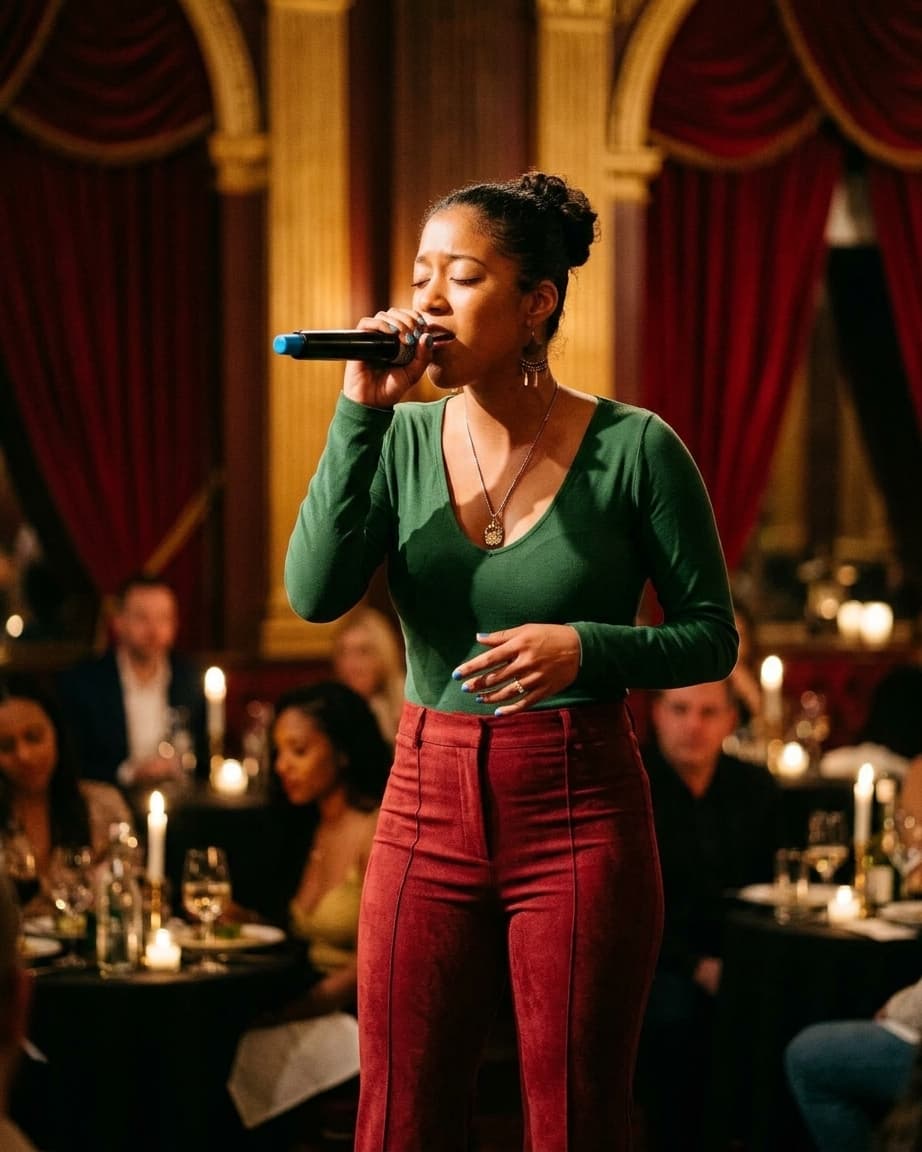
Cocktail hours and private dinners share a particular challenge: the music should elevate the room without ever competing with it. Guests are talking, connecting, settling in — the performance is the atmosphere, not the focus. Getting that balance right is a craft of its own.
Here's what works, and what to ask for when you brief a performer for these parts of an evening.
Tone: warm, present, unobtrusive
The goal is a sound that fills the room and raises its warmth without demanding attention. Soulful, melodic material — jazz-leaning standards, gentle contemporary arrangements — tends to work beautifully across cocktail hours and dinners. The performer should feel present and intentional, never like background filler or a concert guests have to talk over.
Volume that lets conversation breathe
The most common mistake is volume. For cocktails and dining, the music sits just beneath conversation — felt more than listened to. A skilled performer manages this instinctively, easing back as tables fill and lifting in the gaps. Ask how they handle dynamics across a dinner service.
Format: solo or duo, usually
For these moments, a solo or duo almost always fits best — refined, low-footprint, and easy to place in a dining room or reception space. A full band is rarely necessary until the evening moves toward dancing. Match the configuration to the room and the part of the night.
Pacing across the evening
A great performer shapes the music to the evening's progression — lighter and more atmospheric during arrivals and early courses, gradually fuller as the meal winds down and the room opens up. That sense of movement is what makes the music feel composed for your night rather than played at it.
- Aim for warm, present, unobtrusive — atmosphere, not a concert.
- Keep volume just beneath conversation; dynamics matter most.
- Solo or duo usually fits cocktail hours and dinners best.
- Let the program build with the evening's arc.